


Why Every Senior Move Needs a Plan
Moving out of a long-time home is one of the biggest transitions in life. Decades of memories, furniture, paperwork and keepsakes all need a place, and the to-do list can feel endless. The good news: like most big projects, a senior move is far easier when you have a clear plan and break it into small, manageable steps.
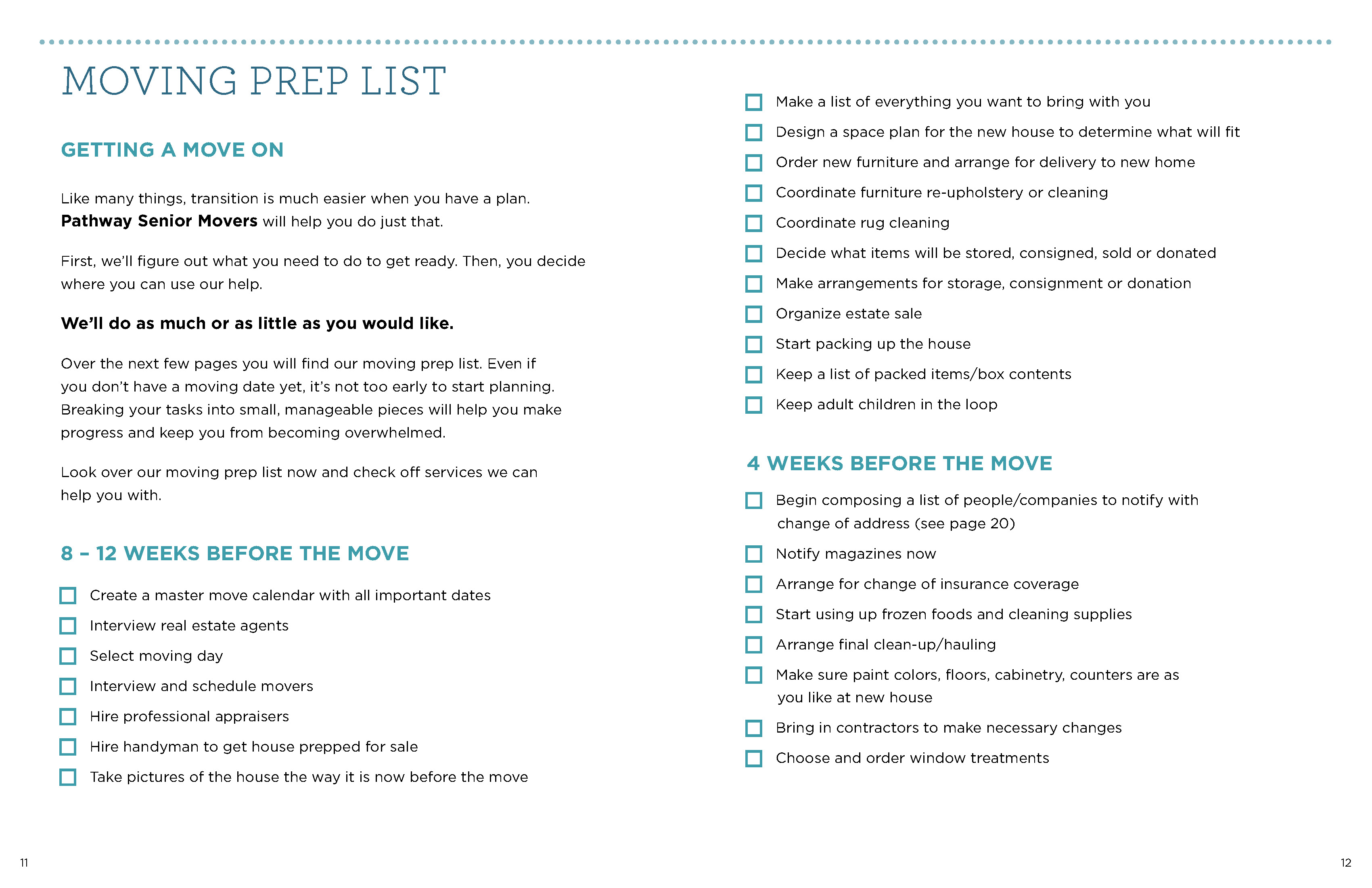
That's exactly why we created this senior moving checklist. It walks you through every stage of the move, starting 8–12 weeks before moving day and continuing until the last picture is hung in your new home. Even if you don't have a moving date yet, it's not too early to start planning.
At Pathway Senior Movers, we'll help you figure out what needs to happen to get ready. Then you decide where you'd like our help. We'll do as much or as little as you would like, from creating a floor plan for your new space to packing, organizing an estate sale, or unpacking and setting up your new home.
Download Your Free Printable Moving Checklist
Prefer pen and paper? Print the checklist, stick it on the fridge and check off tasks as you go.
Tip: As you review the list, circle the tasks you'd like help with. Bring it to your free consultation and we'll build a plan around your needs.
8–12 Weeks Before the Move: Plan, Sort and Decide
This is the most important stage of any senior move. The decisions you make now, what to keep, what to sell and what fits in the new home, shape everything that follows. Give yourself plenty of time here so downsizing never feels rushed.
Set your timeline and team
- Create a master move calendar with all important dates
- Interview real estate agents
- Select moving day
- Interview and schedule movers (look for movers experienced with senior relocation)
- Hire professional appraisers for antiques, art, jewelry and collectibles
- Hire a handyman to get the house prepped for sale
- Take pictures of the house the way it is now, before the move
Plan your new space
- Make a list of everything you want to bring with you
- Design a space plan for the new home to determine what will fit
- Order new furniture and arrange delivery to the new home
- Coordinate furniture re-upholstery or cleaning
- Coordinate rug cleaning
Start downsizing
- Decide which items will be stored, consigned, sold or donated
- Make arrangements for storage, consignment or donation
- Organize an estate sale
- Start packing up the house
- Keep a list of packed items and box contents
- Keep adult children in the loop
Pro tip: A space plan is one of the most helpful downsizing tools. When you can see exactly where your favorite chair and dining table will go, it becomes much easier to decide what stays and what finds a new home.
4 Weeks Before the Move: Notify, Arrange and Prepare the New Home
With a month to go, shift your focus to paperwork, services and getting the new home ready for you.
- Begin composing a list of people and companies to notify of your change of address
- Notify magazines and subscriptions now (they often take 4–6 weeks to update)
- Arrange for a change of insurance coverage
- Start using up frozen foods and cleaning supplies
- Arrange final clean-up and hauling
- Make sure paint colors, floors, cabinetry and counters are as you like them at the new house
- Bring in contractors to make necessary changes
- Choose and order window treatments
Pro tip: Finish painting, flooring and contractor work before furniture arrives. It's much easier — and safer — to update an empty home.
2 Weeks Before the Move: Utilities, Address Changes and Final Donations
Two weeks out, it's time to make sure the lights, water and internet are on when you arrive — and to clear out what isn't coming with you.
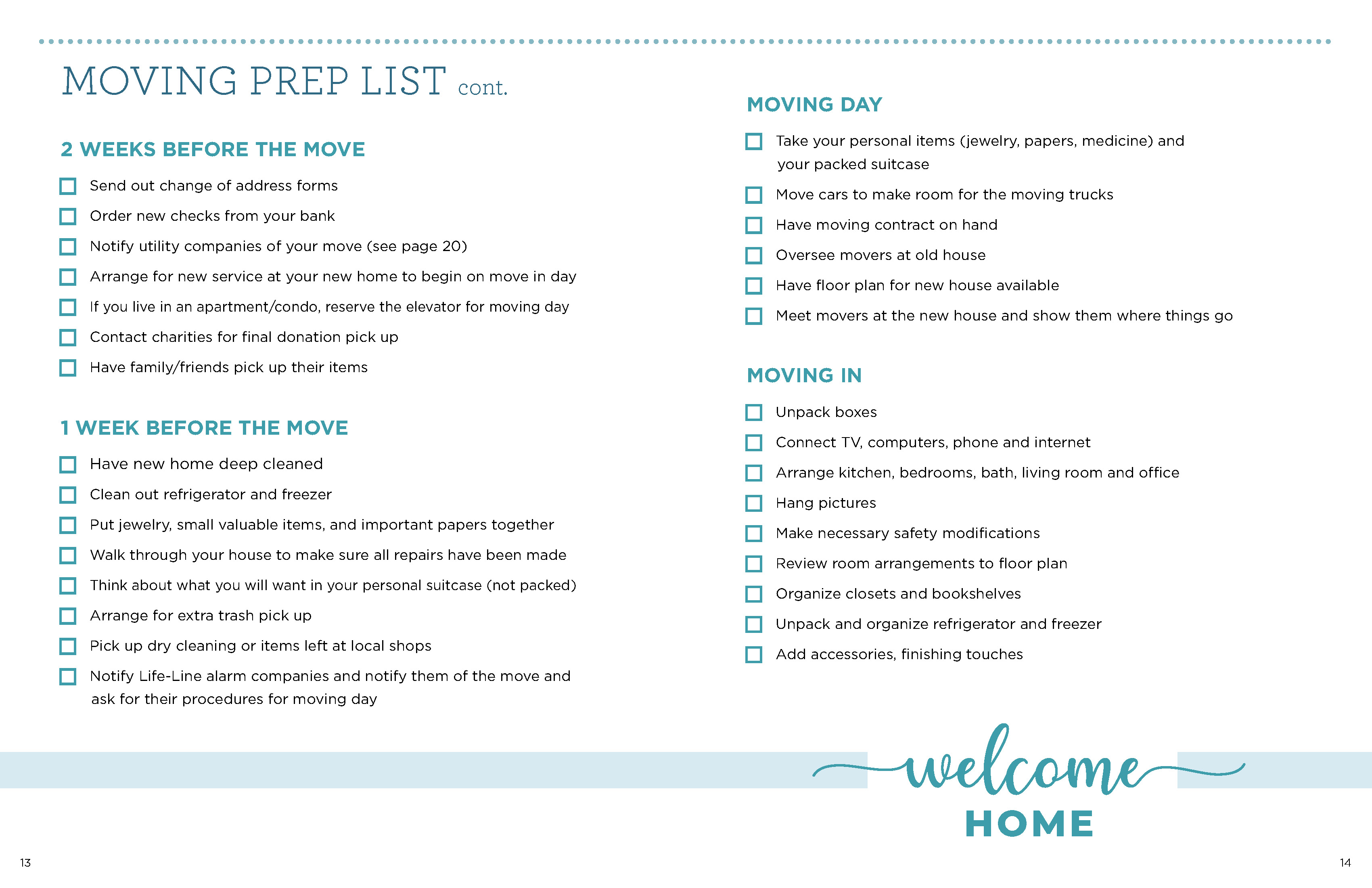
- Send out change of address forms (USPS offers this online)
- Order new checks from your bank
- Notify utility companies of your move
- Arrange for new service at your new home to begin on move-in day
- If you live in an apartment or condo, reserve the elevator for moving day
- Contact charities for final donation pickup
- Have family and friends pick up their items
1 Week Before the Move: Final Details
The final week is about protecting your valuables, wrapping up errands and making sure nothing gets left behind.
- Have the new home deep cleaned
- Clean out the refrigerator and freezer
- Put jewelry, small valuable items and important papers together in one safe place
- Walk through your house to make sure all repairs have been made
- Think about what you'll want in your personal suitcase (not packed with the moving boxes)
- Arrange for extra trash pickup
- Pick up dry cleaning or items left at local shops
- Contact your Life-Line or medical alert company, notify them of the move and ask about their procedures for moving day
Pro tip: Pack your personal suitcase like you're going on a week-long trip: medications, a few changes of clothes, toiletries, phone chargers, glasses and important documents.
Moving Day Checklist
On moving day, your main job is to keep your essentials close and let the movers do the heavy lifting.
- Take your personal items (jewelry, papers, medicine) and your packed suitcase with you
- Move cars to make room for the moving trucks
- Have the moving contract on hand
- Oversee movers at the old house
- Have the floor plan for the new house available
- Meet movers at the new house and show them where things go
Moving In: Settling Into Your New Home
The move isn't finished until your new place feels like home. Take it one room at a time.
- Unpack boxes
- Connect TV, computers, phone and internet
- Arrange the kitchen, bedrooms, bath, living room and office
- Hang pictures
- Make necessary safety modifications (grab bars, night lights, non-slip rugs)
- Review room arrangements against the floor plan
- Organize closets and bookshelves
- Unpack and organize the refrigerator and freezer
- Add accessories and finishing touches
Pro tip: Set up the bedroom and bathroom first. A made bed and a working bathroom on night one make the whole transition feel calmer.
Senior Moving FAQs
How far in advance should seniors start planning a move? Ideally 8–12 weeks before moving day. Downsizing a long-time home takes longer than most people expect, and starting early keeps the process from becoming overwhelming. Even without a set moving date, it's never too early to begin sorting.
What is a senior move manager? A senior move manager helps older adults and their families with every part of a move: creating a floor plan, sorting and downsizing, coordinating estate sales and donations, packing, overseeing movers and setting up the new home.
How do I decide what to keep when downsizing? Start with a space plan of your new home. Knowing exactly what will fit makes it easier to choose which furniture and belongings to bring, and which to store, consign, sell, donate or give to family.
What should I keep with me on moving day? Keep jewelry, important papers, medications and a personal suitcase with a few days of essentials with you — not on the moving truck.
How can adult children help with a parent's move? Keep them in the loop from the start. They can help with decisions, pick up items they'd like to keep, and support you on moving day.
Let Pathway Senior Movers Lighten the Load
A move is a big step, but you don't have to take it alone. Look over this checklist, check off the services you'd like help with, and let our team handle the rest, as much or as little as you'd like.
Welcome home.